CABI
Mobile tools for global food security
Project Overview
CABI, the Centre for Agriculture and Bioscience International, is a global not-for-profit organisation working on important challenges in agriculture and environmental protection. PlantwisePlus is one of its flagship programmes, established to strengthen food security and improve rural livelihoods in developing countries.
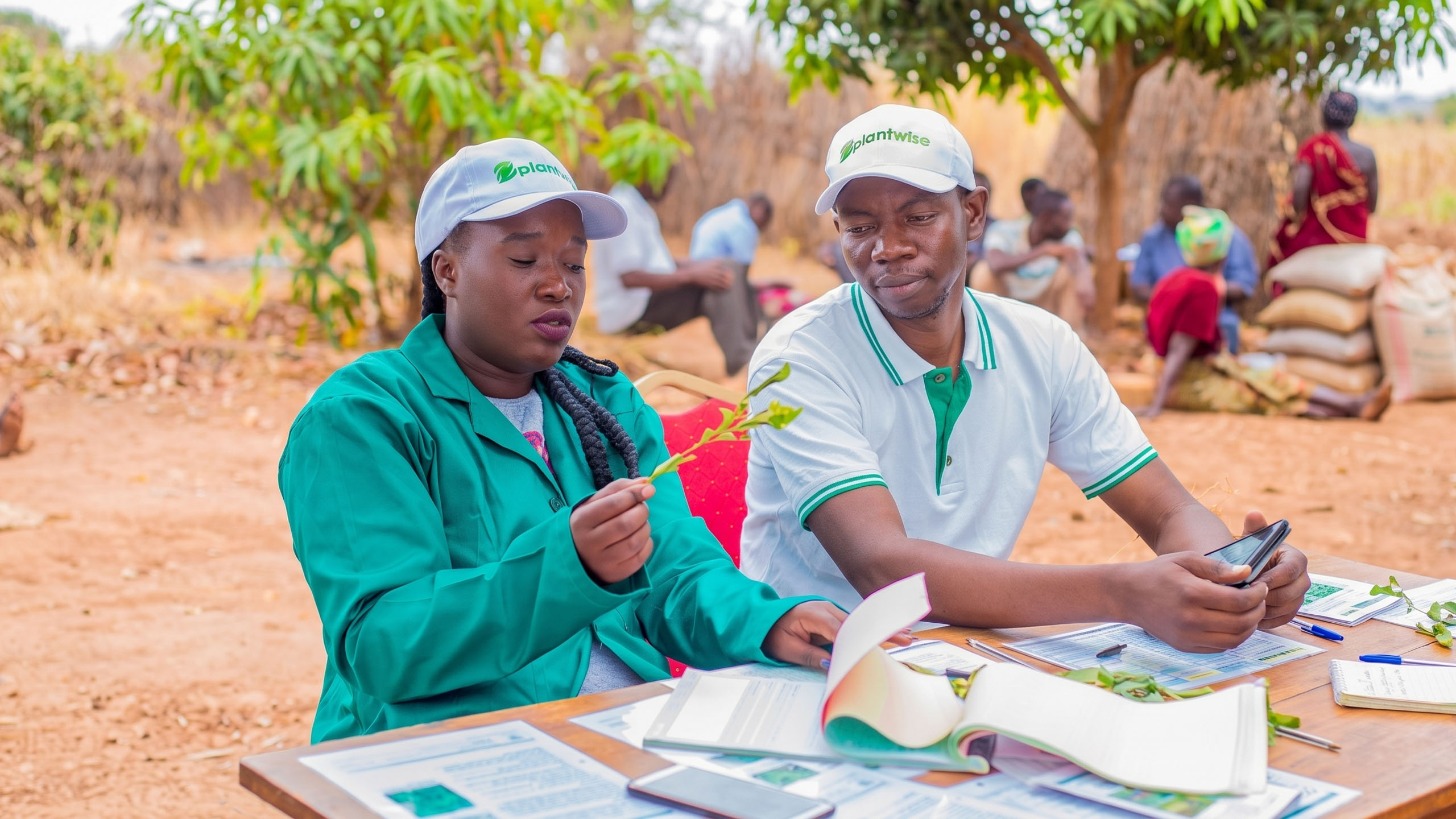
At the heart of PlantwisePlus are the plant doctors: local agricultural experts (and sometimes external specialists) who meet farmers in the field and in village markets. They advise on how to help crops flourish, how to combat disease, and the best practices for soil management and crop rotation. Alongside that advice, each consultation adds to CABI’s agricultural development dataset. The dataset acts as an academic research tool and supports government agriculture departments. It also flows through CABI’s academic publishing department into university libraries and government databases around the world, forming an early-warning system for pest outbreaks.
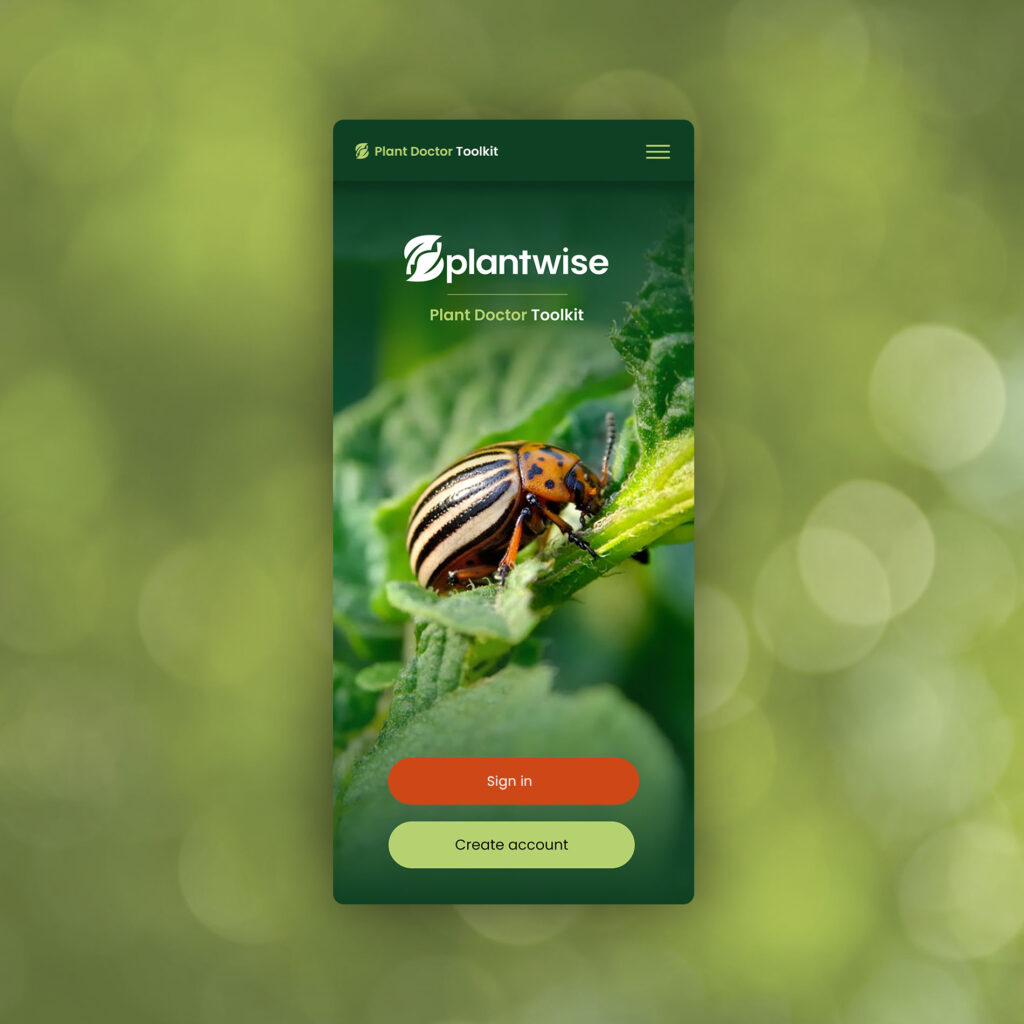
CABI came to Modular with a clear concept: a PlantwisePlus app that would let plant doctors complete their consultations and capture their data on location. Over an 18 month period, with several iterations, we designed and built that app from the ground up, along with the supporting data infrastructure that carries each record into CABI’s systems.
The Challenges:
Before the app, PlantwisePlus data was captured on paper prescription forms, completed by hand during farmer interviews. Plant doctors carried those forms through markets and fields, then returned them to central offices for entry into a digital database. Paper records met the weather, the journey and the pace of a busy clinic, so some were lost or became hard to read. The transcription backlog also meant regional biosecurity teams could wait weeks for the data that tracks active outbreaks.
CABI asked Modular to create an app that would improve accuracy, protect every record and shorten the time between consultation and database. The brief set a demanding specification:
- Run on an inexpensive Samsung Galaxy tablet, widely used in developing countries.
- Remain readable in bright equatorial sunlight.
- Suit touchscreen use by people whose hands are calloused from years of agricultural work.
- Offer a high-contrast, simple interface with large buttons and uncomplicated menus.
- Work fully offline in remote, rural locations.
- Support many countries and multiple languages.
Early digital trials with off-the-shelf data collection tools showed that digital capture was possible, and clarified how much value lay in a tool built around CABI’s own academic publishing databases. The next step was to look closely at the whole clinic workflow, which gave us the opportunity to design something shaped around the way plant doctors actually work.
Human First Design:
At Modular, we’ve seen first hand how technology achieves its greatest value when it puts people first. That’s why we begin with human understanding, not technology.
Specialist Audiences
To build a system that works in the field, we first needed to understand the physical and environmental pressures around the person using it. Plant doctors work outdoors, under direct equatorial sun, in fields where a heavy downpour can arrive without warning. Ubiquitous consumer design patterns naturally face limitations when applied to highly complex, data-dense edge cases like this one. Minimalist icons, nested menus and low-contrast palettes look elegant in a retail portfolio, but in the field they create operational drag, user fatigue and incomplete records. Our Authentic User Experience (AUX) approach puts real-world utility first, and each audience below shaped the design.
Plant Doctors
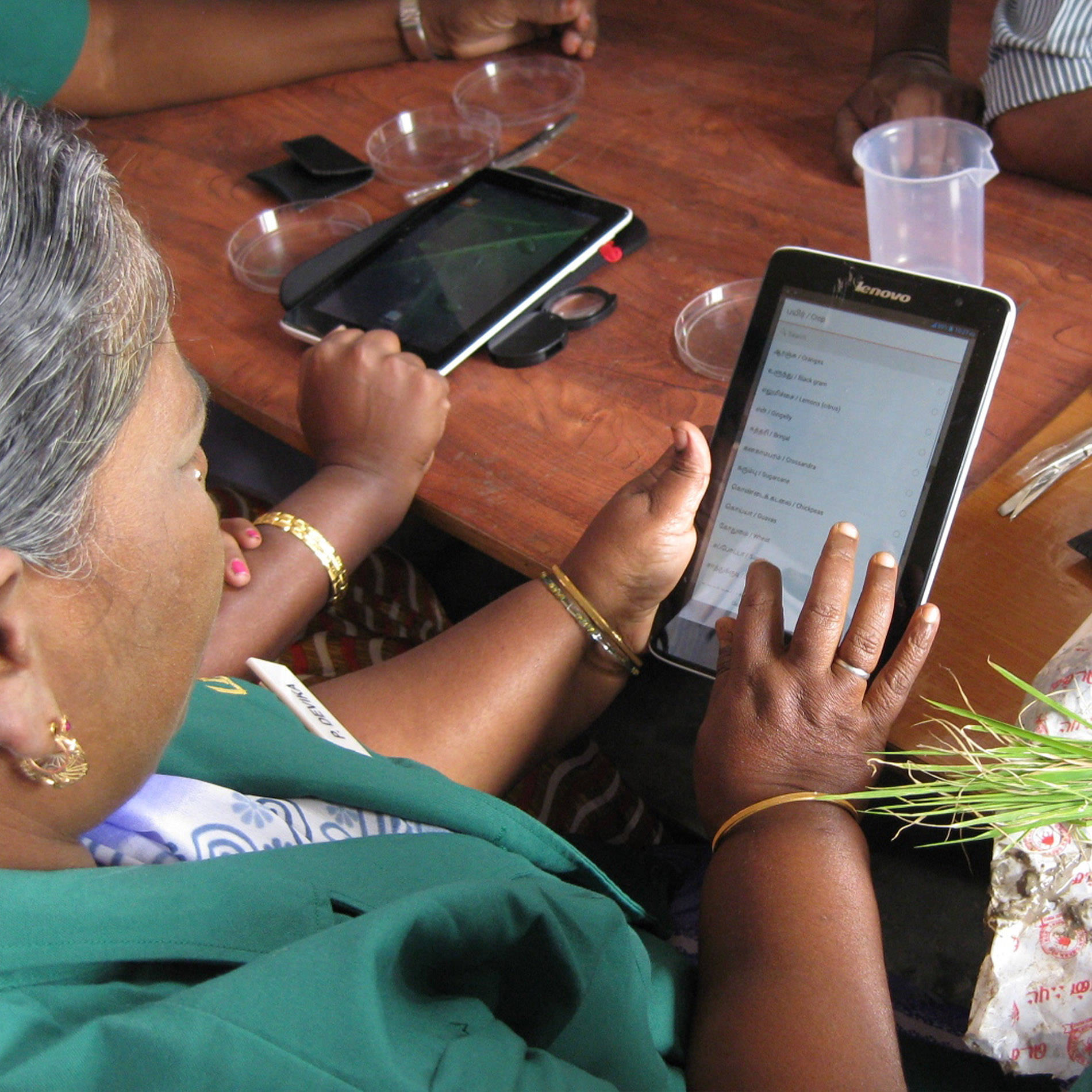
Plant doctors are the daily users of the app, often consulting while holding a crop sample and talking with a farmer. They needed a tool that stays out of the way, so their attention can remain on the farmer and the diseased crop. We designed for glare, for single-hand use, for varied levels of digital literacy, and for the coded language that plant clinics already use, so the app feels familiar from the first consultation.
Subsistence Farmers
Farmers are the reason PlantwisePlus exists. They benefit when advice reaches them promptly and stays with them after the consultation. The app formats a summary crop recommendation as an SMS, queues it on the device and sends it as soon as a mobile signal is found. The farmer receives lasting advice, and the plant doctor carries no additional workload.
CABI, Researchers and Government Departments
The data captured in the field supports academic researchers and government agriculture departments. Accurate, structured and timely records give them dependable evidence for tracking pest outbreaks and responding to food security threats. Our design priority for this audience was clean data from the first entry.
Donors and the Wider Public
PlantwisePlus also speaks to the donors who support it and to the wider public. We built a WordPress website as a marketing facility for the programme, supported by promotional videos and animations
Design Solution:
Mapping the workflow. We began with audience research and physical workflow observation of plant clinics, then mapped user journeys and designed the app’s essential features and interfaces from scratch. Our focus moved from building an electronic form to understanding the clinic as a whole.
A tool built for glare and calloused hands. The interface uses high-contrast screens readable in strong sunlight and large, forgiving touch targets that support rapid, confident navigation. Menus are simple and buttons are generous, so the plant doctor can work quickly with one hand.
Familiar codes, fewer taps. Plant clinics work with codes, so we used coded multiple-choice options to record work done, crop types and recommendations given to farmers. The most frequently used crops are recognised by the app, so details need entering only once.
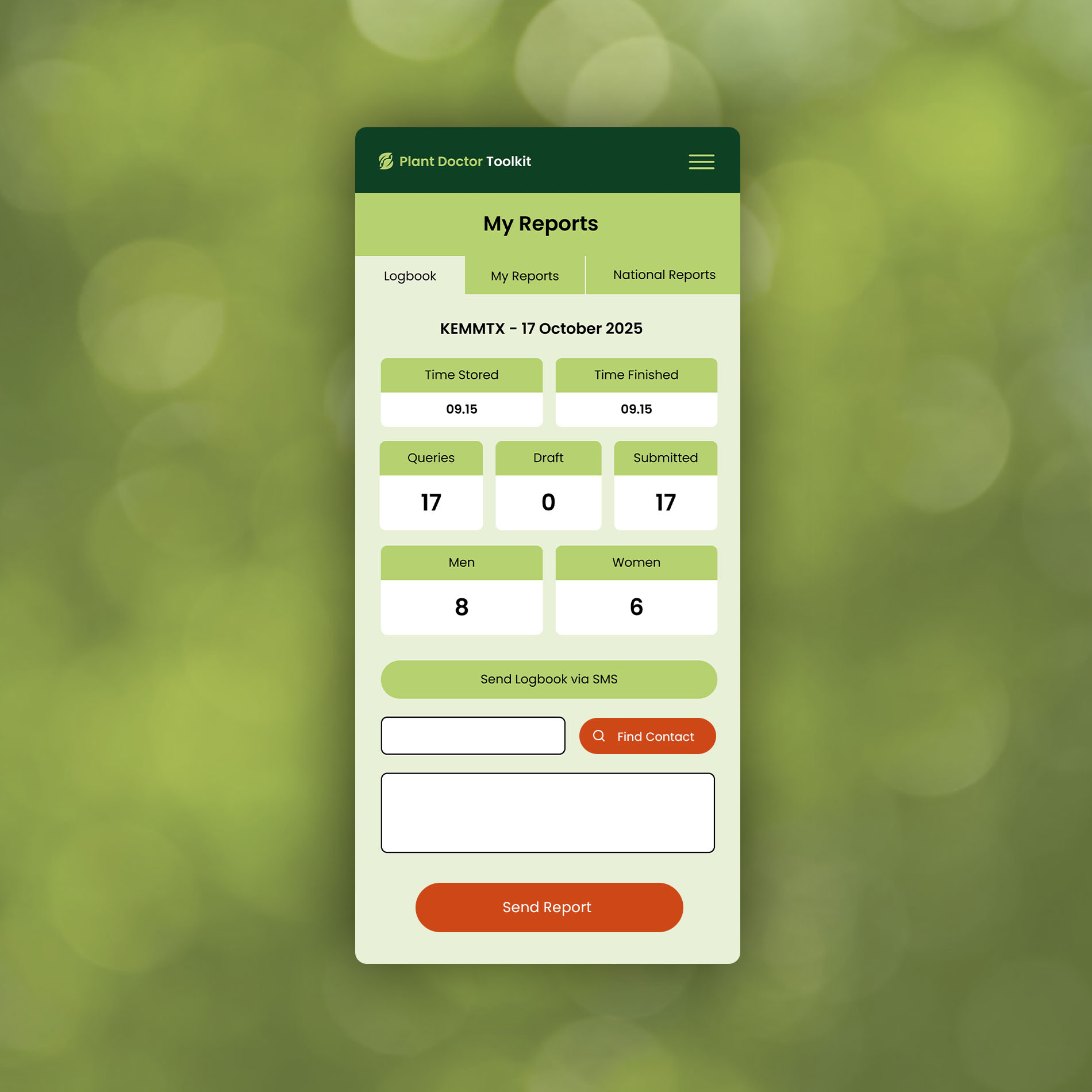
Insight at a glance. In-app analytics tell each plant doctor how many farmers they have seen that month and what data they have collected, which gives them a clear view of their own contribution to the programme.
Tested where it matters. Before the global rollout, we ran iterative field trials with small numbers of active plant doctors. We watched how they entered data while holding a crop sample and speaking with a farmer, how glare affected readability and how calloused hands interacted with touch thresholds. Those observations led to micro-adjustments, including input fields optimised for single-hand navigation and a simpler sequence of screens. The Software Validation Protocol was first undertaken in a test country and refined before the app reached the other territories where PlantwisePlus operates.
Technical Solution:
The right hardware. The budget Samsung Galaxy tablet offered the most cost-effective and scalable option for global distribution. We engineered a bespoke Android application tailored to those devices, delivering strong performance on affordable hardware.
Offline-first architecture. The app is designed for poor and intermittent connectivity, with device caching and secure local data storage. Plant doctors can complete consultations, photograph crop damage with the tablet’s native camera and log diagnoses using coded selectors. When a mobile signal is found, the app compresses the cached data and uploads it to CABI’s systems.
Auto-save for unpredictable weather. Forms can be saved as drafts and completed later. If rain arrives mid-consultation, the plant doctor closes the device and the app secures the draft, ready to resume when conditions allow.
Identification and customisation. A key-code system identifies which plant doctor has submitted each record. The app is highly customisable, harvesting data in a format that can be modified as required and storing it according to CABI’s system requirements at the time of capture. Multiple language versions support the programme’s international reach.
SMS recommendations. The app composes a summarised crop recommendation for the farmer, queues it locally and sends it automatically once a signal is detected.
A data transport portal. We helped CABI build a bespoke data transport portal, using geolocation software that takes data from the app and migrates it into CABI’s data storage facilities. Secure, high-throughput integrations connect field devices with CABI’s core academic databases and the Plantwise Online Management System (POMS).
A desktop companion. Some PlantwisePlus data continued to be gathered on paper, so we built a desktop version of the app that allows manual input, local database management and draft synchronisation.
Technology stack: Android application framework, offline database syncing, SMS integration, custom API data portal and WordPress (open source).
Deliverables:
- Android Data Collection App: a high-contrast, offline-first application engineered for Samsung Galaxy tablets, with coded input, camera capture, auto-save drafts, in-app analytics and multiple language versions.
- Desktop Data Collection App: a companion application for manual data entry, local database management, draft synchronisation and administrative uploads.
- Data Transport Portal and API Integrations: secure pipelines, including bespoke geolocation software, connecting field devices to CABI’s academic databases and POMS.
- SMS Recommendation System: automatically formatted crop advice, queued locally and sent to farmers when a mobile signal is found.
- Audience Research and Workflow Mapping: physical workflow observation, environment mapping and user journey mapping across plant clinics.
- UX and UI Design: high-information-density interfaces designed for low-connectivity settings, rapid navigation and varied levels of digital literacy.
- System Architecture Design: technology-agnostic architecture covering offline caching, local database security and network data compression.
- Usability Testing and Field Trials: iterative testing cycles with active plant doctors in their working environments, followed by the Software Validation Protocol in a test country.
- Plantwise Marketing Website: a WordPress website with promotional videos and animations, communicating the programme to donors and the public.
- Strategic Product Stewardship: ongoing technical advice and consultative support, keeping the software ecosystem sustainable across its multi-year lifecycle.
Impact:
The PlantwisePlus app is used by hundreds of plant doctors in 36 countries, in multiple languages. Digital capture has brought a marked reduction in data loss and in the time it takes for records to reach CABI, along with improvements in accuracy and efficiency. Structured, timely data now moves from village markets into the systems that serve researchers and government departments, supporting global food security insight and research.
Farmers benefit directly. They receive actionable crop advice by SMS, and plant doctors keep their attention where it belongs, on the farmer and the crop. The intuitive, human-centred interface supported strong adoption, with little need for extensive training or post-launch workarounds.
The project marked the start of a ten-year partnership between Modular and CABI, spanning more than twenty digital initiatives.
Project Specification
Products
- Bespoke Software
- Mobile Application
- Web Application
Services
- Digital Strategy
- Stakeholder engagement
- User Journeys
- UX Design
- Wireframing
Technologies
- .NET
- Android
- AngularJS
- C#
- HTML5
- iOS
FAQs
How do you design an app for places with little or no connectivity?
We build offline-first. Data is cached and stored securely on the device, drafts save automatically, and records upload in compressed form when a signal appears. For Plantwise, that meant plant doctors could work anywhere, including village markets, and know every record was safe.
How do you design for people working outdoors?
We start by observing the work as it happens. In the Plantwise field trials, that revealed how glare, rain, calloused hands and single-hand use shaped what the screen needed to do, so we designed high-contrast displays and large touch targets to match.
Can a bespoke app connect with our existing databases?
Yes. For CABI, we built secure data transport pipelines and a bespoke portal that carry records from the field into academic databases and the Plantwise Online Management System. The app stores data according to the client’s system requirements at the time of capture.
How do you test before a large international rollout?
We run iterative field trials with a small group of real users, then validate the software in a test country, refining it before wider deployment. The Plantwise app went through this process before reaching other territories.
How long does a project like this take?
The Plantwise app was developed over 18 months with several iterations, and the advanced analytics arrived in the latest one. The timeline for each project depends on its scope, and we agree it with our clients from the outset.
Was the Plantwise Plant Doctor app designed for a global audience?
Yes. The Plantwise Plant Doctor app was designed for global reach from the start, to support farmers wherever they are. It was developed in 12 languages and used across 36 countries, so plant doctors could diagnose and advise in the regional language of the farmers they serve.
The app was developed in:
- Dari
- Dutch
- English
- French
- Khmer
- Marathi
- Nepali
- Portuguese
- Sinhala
- Spanish
- Tamil
- Urdu


Have a complex digital product, platform or service to shape?
Book a call and we’ll help you explore what’s worth building, how it could work, and where to start.
Book a call