Conservation Evidence
Enhancing Global Conservation Efficiency
Project Overview
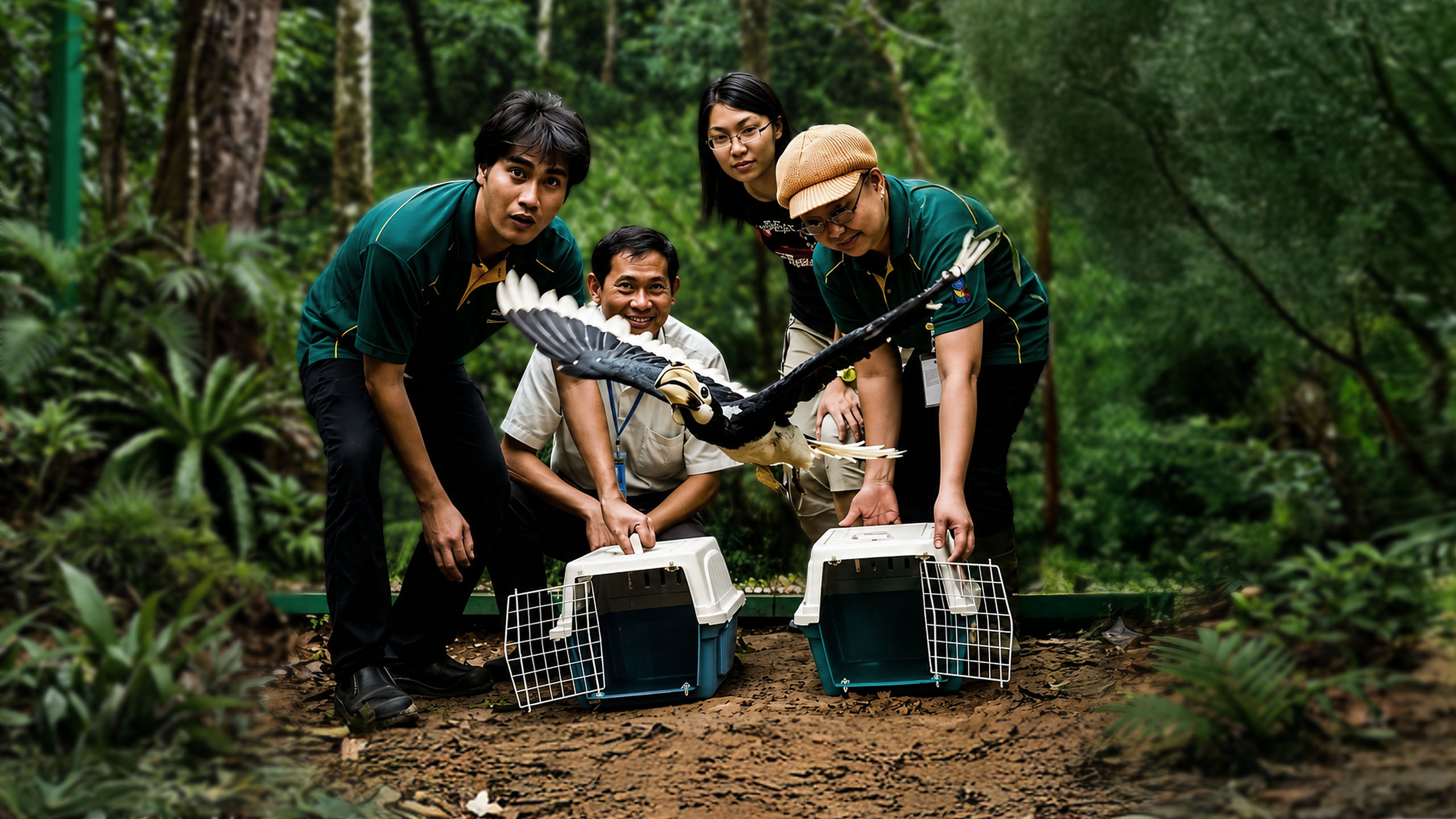
Conservation Evidence is a globally authoritative, open-access repository dedicated to evidence-based conservation. It is sponsored by and based at the University of Cambridge, which manages the project’s financial operations.
The team curates vast volumes of scientific research, bridging the gap between academic literature and practical work in the field. An international panel of experts reviews the evidence to identify specific conservation actions, such as bat habitat restoration or seagrass protection, and to rate their effectiveness.
The results are compiled into comprehensive synopses covering distinct species and habitats. Free access to these verified insights helps conservation practitioners, field scientists and global policymakers make rapid, informed decisions grounded in empirical outcomes, and supports a wider movement toward evidence-based decision-making.
In 2018, Modular was appointed as the platform’s long-term technical partner, to maintain, support and incrementally evolve a system that sits at the heart of this work.
“The Modular team has been creative, accommodating, friendly and patient since they started providing website support for us a few years ago. They recently redesigned our website and we are really pleased with the result. We now have a website which is visually appealing and easy to navigate. A great team! Would highly recommend.”
Kate Willott, Conservation Evidence Project
The Challenges:
The Conservation Evidence platform was first built in 2011 by an external agency, using the Yii PHP open-source framework. In 2018 the original supplier was closing down, and the university needed an expert technical partner to take on long-term stewardship. Following a comprehensive audit of the codebase, Modular was appointed.
The audit gave us a clear picture of the platform’s heritage. It had been designed before smartphones became ubiquitous, so the frontend was built for desktop screens and small displays called for a good deal of zooming. Behind the scenes, complex data dependencies, historic taxonomic inconsistencies and rigid content hierarchies added to the effort required of the administrative team. The project’s budget called for a thoughtful, targeted approach that would deliver the greatest value from every pound.
We were asked to:
- Modernise the user experience with a fully responsive interface.
- Standardise taxonomic terms across the database.
- Keep the experts’ backend workflow running smoothly, and protect the publishing structures for Research Studies, Actions and Synopses.
- Build custom API integrations to share data with major international conservation networks.
- Shield the open-access server from aggressive non-human traffic.
Human First Design:
At Modular, we’ve seen first hand how technology achieves its greatest value when it puts people first. That’s why we begin with human understanding, not technology.
Specialist Audiences
Conservation Evidence serves specialists who often work in remote or low-connectivity environments, frequently on mobile devices, in strong sunlight and with limited battery life. Ubiquitous consumer design patterns face natural limitations in these data-dense, field-based settings. Minimalist layouts, low-contrast text and script-heavy interface elements create operational drag and user fatigue.
We approached the project through our Authentic User Experience (AUX) philosophy, which questions what belongs on a screen long before any code is written. Modular designed a UX framework, including persona documentation and workshop structures, so the Conservation Evidence team could lead stakeholder workshops themselves. The insights they gathered showed that practitioners wanted structured, accessible content in place of long stretches of academic text. They also showed that a conservation action can perform very differently from one ecosystem to the next, which made geographical context a critical validation parameter.
Those findings guided our design strategy: a consolidation of content templates and the integration of spatial mapping.
Conservation Practitioners
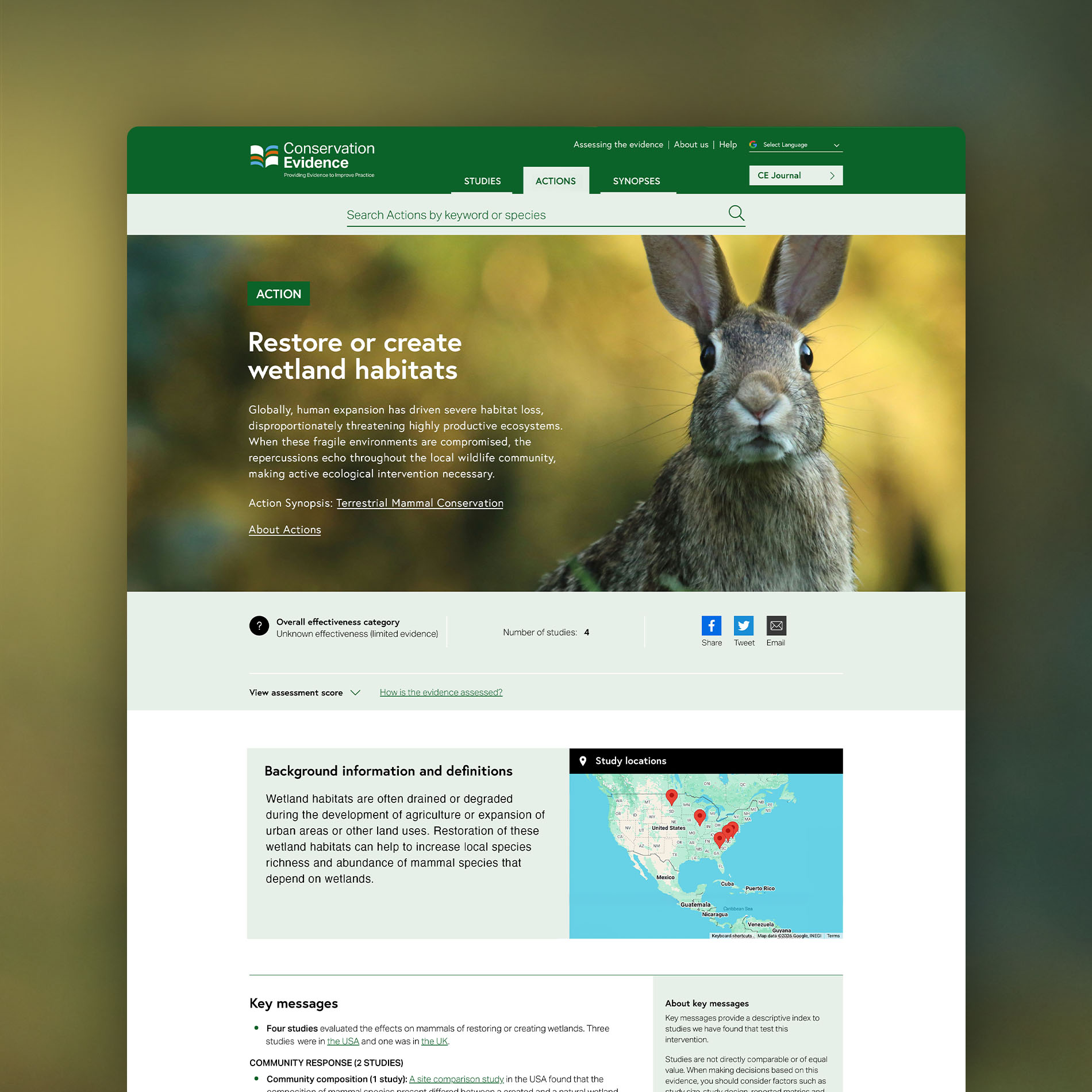
Practitioners need to decide quickly which action to take and to see how it has performed elsewhere. We consolidated content templates so that each action, study and synopsis presents its essential evidence in a consistent, scannable form.
Field Scientists
Field scientists work in demanding environments and often reach the platform on a phone. The responsive interface supports them wherever they are, and Google Maps integration shows where each study took place, so they can judge how findings might apply to their own ecosystem.
Environmental Policy Makers
Policy makers rely on verified ecological insight to support decisions and build stakeholder confidence. By connecting with partner networks that policy makers already use, the platform places effectiveness evidence alongside the species profiles they consult.
The Expert Panel and Editorial Team
The experts who review and curate the evidence use a custom backend interface. We maintained that workflow throughout the modernisation, and provided a staging environment and UAT documentation so the team could validate every change.
Donors and Supporters
To support storytelling and fundraising, we created a separate WordPress-managed campaign platform that communicates the project’s purpose and progress.
Design Solution:
A research framework the team owns. Our persona documentation and workshop structures equipped the internal team to run stakeholder research themselves. The team gathered first-hand user insight, and the human-first thinking behind the design now lives within the university organisation.
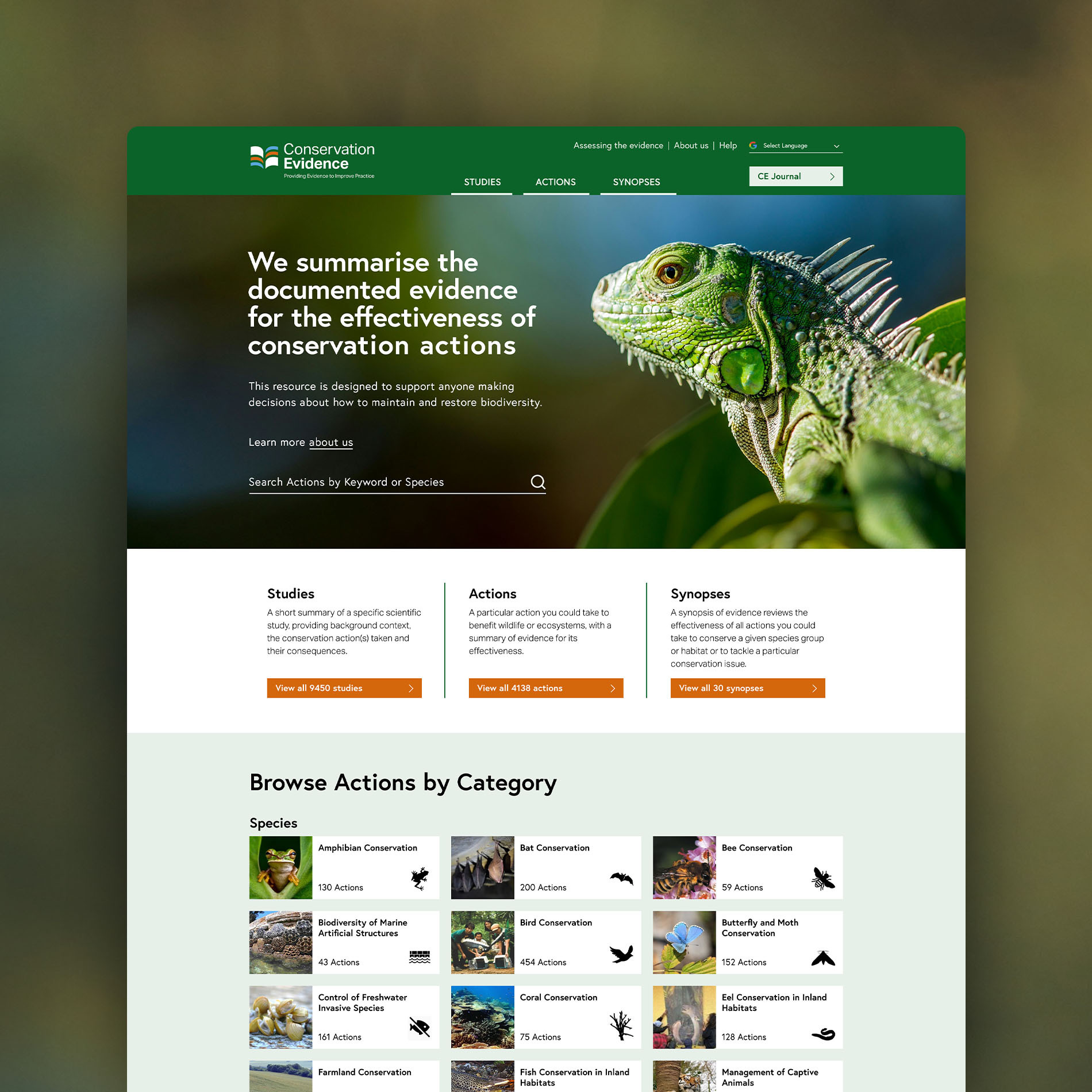
Consolidated templates. Through wireframing and template consolidation, we turned dense academic data into an intuitive visual language. A smaller set of consistent page layouts helps users find what they need, and maps neatly onto the existing backend records.
Responsive by design. The new frontend adapts to every screen size, with flexible visual frameworks that the team can extend as the platform grows.
Geography at the centre. Spatial mapping gives each study a place on the map, adding the context that field application depends on.
Tested before launch. We delivered a dedicated staging environment where the internal team could stress-test the new mobile-responsive templates against real, live database content. The team validated user journeys under simulated field conditions and observed how administrators handled data entry for new studies and how external specialists used search results. The testing confirmed that existing records mapped cleanly to the consolidated layouts, and that mobile navigation worked smoothly, so the interface reached global practitioners fully refined.
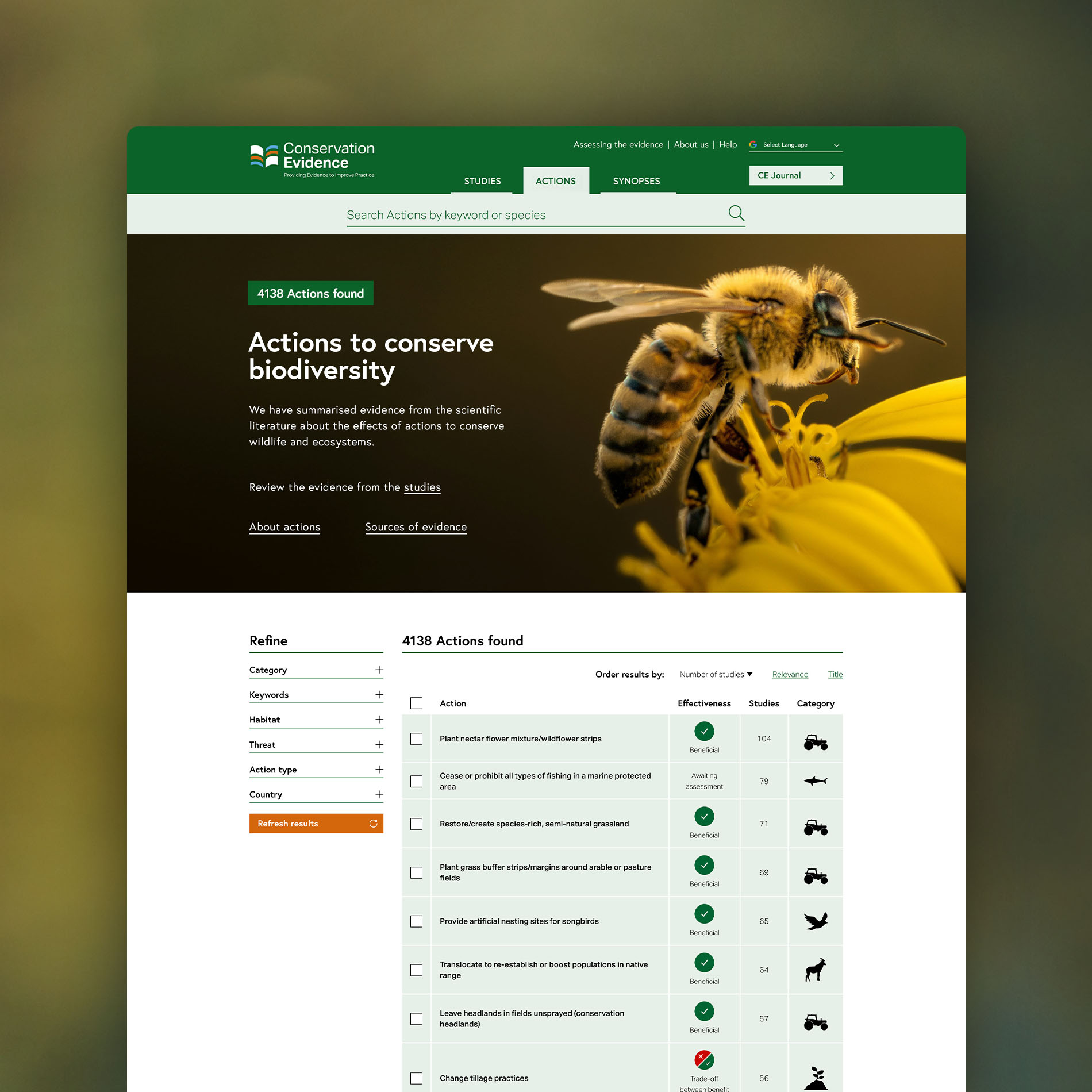
Technical Solution:
Preserving what works. We retained the Yii PHP framework and decoupled the frontend from the core database management system. This allowed us to replace the original frontend with a fully responsive interface while the experts’ backend curation workflow carried on as normal.
Responsive frontend. Mobile visits now account for over forty percent of total platform traffic.
Partner network integrations. Custom API integrations connect the university database with the IUCN Red List website, the British Trust for Ornithology (bto.org) and BirdLife International. Specific conservation actions and effectiveness ratings display dynamically alongside endangered species profiles.
Mapping. The Google Maps API renders the exact spatial coordinates where historical research studies took place.
Search and taxonomy. We wrote targeted scripts that clean and standardise historic taxonomic terms in the database, which sharpened the accuracy of the underlying Sphinx full-text search engine and kept the existing database structure in place.
Resilient infrastructure. The platform runs on a high-performance DigitalOcean environment, with daily and weekly automated backups, automated SSL renewals through Let’s Encrypt, and continuous monitoring through Uptime Robot.
Defending an open resource. Open access welcomes everyone, including a growing number of automated visitors with a healthy appetite. Automated traffic, including requests from AI platforms making hundreds of calls, has risen rapidly. We continue to adapt security configurations and server caching layers to absorb these requests, protecting performance for the practitioners who depend on the platform.
A campaign platform. A separate WordPress-managed site (about.conservationevidence.com) supports storytelling and fundraising, completing a digital ecosystem around the specialist user.
Technology stack: Yii PHP framework, Sphinx search, Google Maps API, WordPress, custom API integrations.
Deliverables:
- Responsive Web Platform: a mobile-optimised frontend giving practitioners access to open-access research in the field, now serving over forty percent of total site visits.
- Backend Curation Interface Maintenance: ongoing support, security hardening and structural maintenance of the custom Yii PHP framework used by multiple domain experts to curate scientific research.
- Custom API Integrations: data bridges with the IUCN Red List, the British Trust for Ornithology and BirdLife International, displaying conservation actions alongside threatened species data.
- User Research and Persona Framework: a workshop and persona documentation framework that enables the internal team to gather deep user insight independently.
- Authentic User Experience (AUX) Design: wireframing and template consolidation that convert complex academic data into an intuitive visual language, with backend operations kept steady.
- System Architecture and Search Optimisation: refinement of the Sphinx full-text search engine and data-cleansing scripts that standardise taxonomic terms.
- Geographic Visualisation Mapping: Google Maps API integration communicating the precise locations of research studies.
- Usability Testing and Staging Protocols: a dedicated staging environment and User Acceptance Testing (UAT) documentation supporting smooth deployment for the administrative team.
- Content Management Training Guides: guides and flexible visual frameworks that help the internal team work independently.
- Campaign Platform: a WordPress-managed site supporting storytelling and fundraising.
- Continuous Product Stewardship: active advisory services protecting the open-access platform against automated bot traffic, AI model training scrapers and evolving cybersecurity risks.
Impact:
The responsive interface has opened Conservation Evidence to a much wider range of devices. Mobile users now make up more than forty percent of the platform’s global audience, and the redesign has brought growth in both unique visitors and average session duration.
Automated data streams to the IUCN, BTO and BirdLife International extend the reach of evidence-based practice, placing effectiveness ratings where practitioners and policy makers are already looking. This strengthens the platform’s value to international environmental policy and stakeholder buy-in.
The partnership since 2018 has equipped an internal team, working within an academic budget, to self-serve effectively. Content management training guides and flexible visual frameworks give the team confidence to manage and evolve the platform, and the human-first, user-centred methods introduced through our framework are now part of how the university team works. Sustained technical stewardship has kept a critical, free-access global resource dependable, secure and ready for each new wave of devices and visitors.
Project Specification
Products
- CMS Website
- Mobile Application
- Website
Services
- Digital Strategy
- Ongoing Platform Support
- Stakeholder engagement
- User Journeys
- UX Design
- Wireframing
Technologies
- PHP
- WordPress
FAQs
Do we need to rebuild a legacy platform to modernise it?
Often, targeted interventions can deliver the modernisation you need. For Conservation Evidence, we decoupled the frontend from the core database management system and replaced the interface, keeping the expert-built backend workflow in place. A focused approach preserved the budget and kept the experts’ daily work uninterrupted.
How do you design for specialists working in remote environments?
We start by asking what truly belongs on each screen, long before code is written. Our Authentic User Experience approach considers the realities of connectivity, devices, sunlight and battery life, then shapes templates, contrast and navigation around them.
How can an open-access resource stay protected from automated traffic?
Open access calls for ongoing care. We adapt security configurations and server caching layers over time, so that surges of automated requests are absorbed and legitimate visitors enjoy consistent performance. Continuous monitoring and regular backups add further resilience.
Can you connect our data with partner organisations?
Yes. For Conservation Evidence, custom API integrations with the IUCN Red List, the British Trust for Ornithology and BirdLife International display conservation actions and effectiveness ratings alongside species profiles, so the evidence appears where people are already looking.
How should we plan budgets for long-term sustainability?
We recommend building maintenance into the initial scope. In our experience, setting aside around ten percent of the technical budget for proactive security, automated monitoring and database indexing extends the operational life of a platform and avoids the invisible downstream cost of emergency remediation.
How does the partnership continue after launch?
We act as a dedicated strategic product partner. Alongside hosting, security and support, we provide training guides, advisory services and incremental evolution as new needs emerge. Since 2018 this approach has kept Conservation Evidence a free, trusted source of verified ecological insight for practitioners, scientists and policymakers around the world.


Have a complex digital product, platform or service to shape?
Book a call and we’ll help you explore what’s worth building, how it could work, and where to start.
Book a call