CABI
Mobile tools for global food security and field data collection.
Project Overview
The Centre for Agriculture and Bioscience International (CABI) is an esteemed global, not-for-profit organisation dedicated to solving critical challenges in global agriculture and environmental protection.
One of their most vital operations is the Plantwise programme, a worldwide initiative designed to strengthen food security and improve rural livelihoods by establishing network clinics in developing countries.
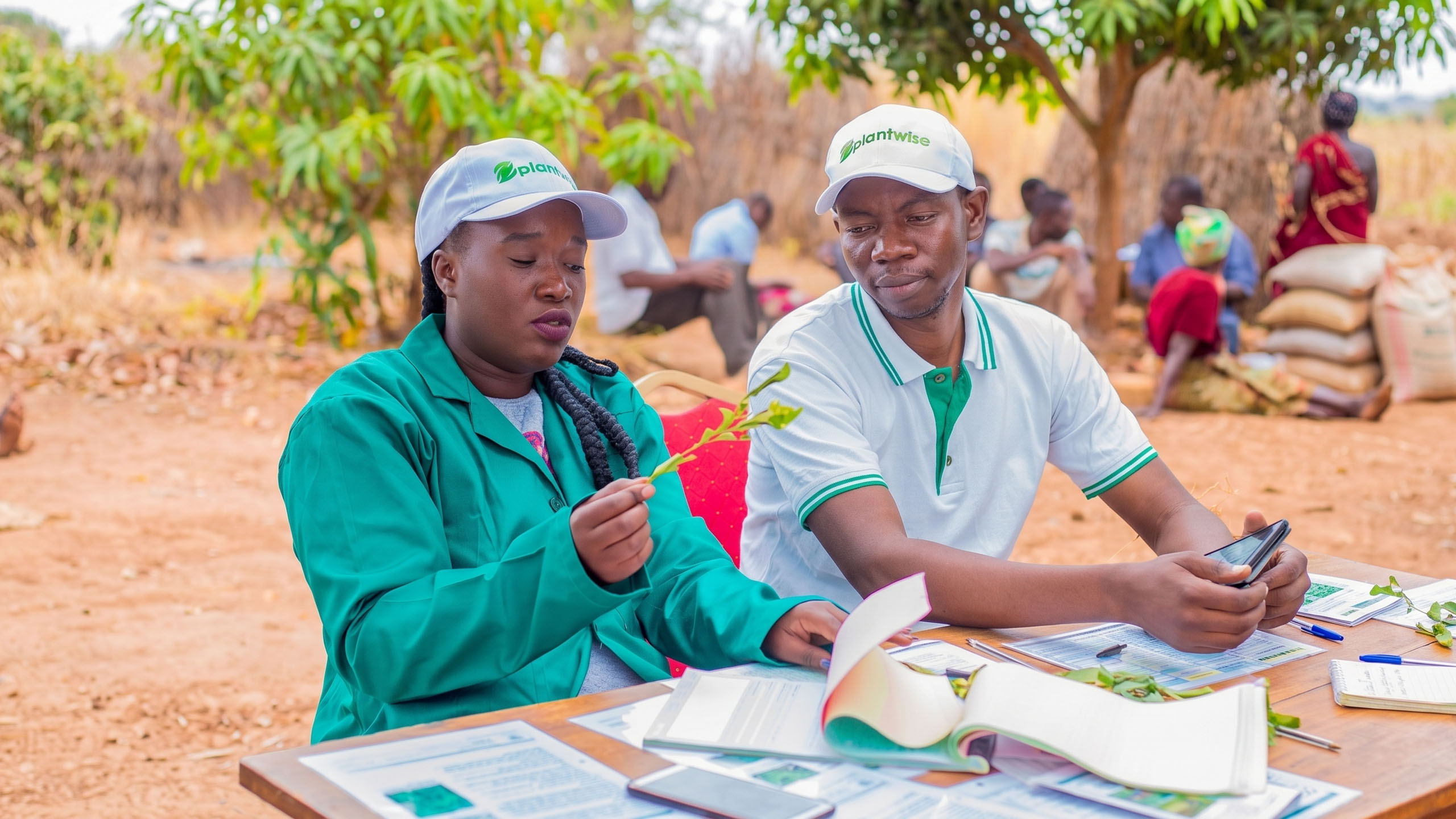
Through these clinics, local agricultural specialists, known as plant doctors, consult directly with subsistence farmers to diagnose devastating crop diseases, recommend treatment protocols, and gather agricultural intelligence.
At an international scale, the data generated during these simple consultations serves as a critical monitoring asset. When compiled, this data provides global researchers and government ministries with an active early-warning system to track pest outbreaks and combat food insecurity.
To support this massive global network, CABI required a digital system capable of gathering flawless agricultural records across dozens of nations, multiple languages, and highly challenging operational landscapes.
Modular took an approach that prioritised understanding our internal and external audiences, and helped us sense check our assumptions by qualifying them against user needs. This human first rather than tech first approach delivered a platform that we can now manage ourselves. The target audience now find the information that is relevant to them and have widely commented on the improvements that have been made.
Gareth
Programme Manager
The Challenges:
TITLE TBC
Prior to our partnership, CABI’s data collection process was entirely analog, relying on physical paper prescription forms completed by hand during farmer interviews. Plant doctors carried these paper forms through rural markets and muddy fields, later transporting them to central offices for manual entry into a digital database. This legacy methodology introduced a substantial hidden risk to the organisation. Paper records were frequently lost, ruined by unpredictable weather, or rendered completely illegible due to rushed handwriting. The manual data transcription backlog delayed critical disease tracking, leaving regional biosecurity teams blind to active outbreaks for weeks at a time.
To resolve this, early digital concepts focused on utilising generic, off-the-shelf mobile data collection applications. While these trials successfully demonstrated that digital data capture was possible, they introduced a major structural bottleneck. The generic templates lacked the flexibility to integrate natively with CABI’s complex academic publishing databases, creating a silo of unformatted data.
Additionally, simply copying the physical paper forms directly onto a digital tablet failed to address the human and environmental realities of the field. Had the organisation proceeded with a simple screen-by-screen translation of the paper forms, they would have locked themselves into deep technical debt, creating an over-engineered interface that remote operators would ultimately struggle to adopt. Our strategic intervention shifted the focus from merely building an electronic form to thoroughly auditing the physical workflow of the clinic.
The Solution:
TITLE TEXT TBC
XXXXXXXXXX
The Impact:
TITLE TEXT TBC
To build a system that works, we must first understand the intense physical and environmental pressures surrounding the operator. Plant doctors work outdoors in village markets, under direct, blinding equatorial sunlight, and in fields prone to sudden, heavy downpours.
Additionally, many of these agricultural specialists have calloused hands from years of manual field labour, making the delicate, precise swipe gestures of modern consumer applications frustrating and highly error-prone. Ubiquitous consumer design patterns naturally face limitations when applied to highly complex, data-dense edge cases, often relying on minimalist icons, complex nested menus, and low-contrast palettes. While these design choices look elegant in a retail portfolio, they create immediate operational drag when deployed in the field, causing extreme user fatigue and high rates of incomplete data entry.
Through our Authentic User Experience (AUX) methodology, we prioritised real-world utility over cosmetic trends. We recognized that the interface had to accommodate physical realities, which meant high-contrast screen displays readable in glaring sunlight, and large, forgiving touch targets designed for rapid, confident navigation. Our research revealed that the software must serve as a reliable, almost invisible tool, allowing the doctor to focus entirely on the farmer and the diseased crop, rather than the device.
Plant Doctors
TEXT SENTENCES REQUIRED .
Agricultural Extensions Workers
TEXT SENTENCES REQUIRED.
Subsistence Farmers
TEXT SENTENCE REQUIRED.
Project Specification
Services Provided
Strategy and Discovery
- Audience Research
- Stakeholder Engagement
- Discovery Workshops
- Technical Planning
- Persona Development
- User Journey Mapping
User Experience and Design
- User Experience (UX) Design
- Wireframing
- Interactive Prototyping
- User Interface (UI) Design
- Visual Identity
- Brand Asset Design
Engineering & Evolution
- Bespoke Software Development
- Technical Systems Architecture
- CMS Website Training
- Maintenance and Support
- Enterprise Hosting Infrastructure
Technology Stack
Core CMS Infrastructure
- Android Application Framework
- Offline Database Syncing
- WordPress Open Source
- SMS Integration
- Custom API Data Portal

AI Enabled, Human First Global Platform.
StarIDAZ

Amet minim mollit non deserunt ullamco est sit aliqua dolor do amet sint.
SciDev
Have a complex digital product, platform or service to shape?
Book a call and we’ll help you explore what’s worth building, how it could work, and where to start.
Book a call